
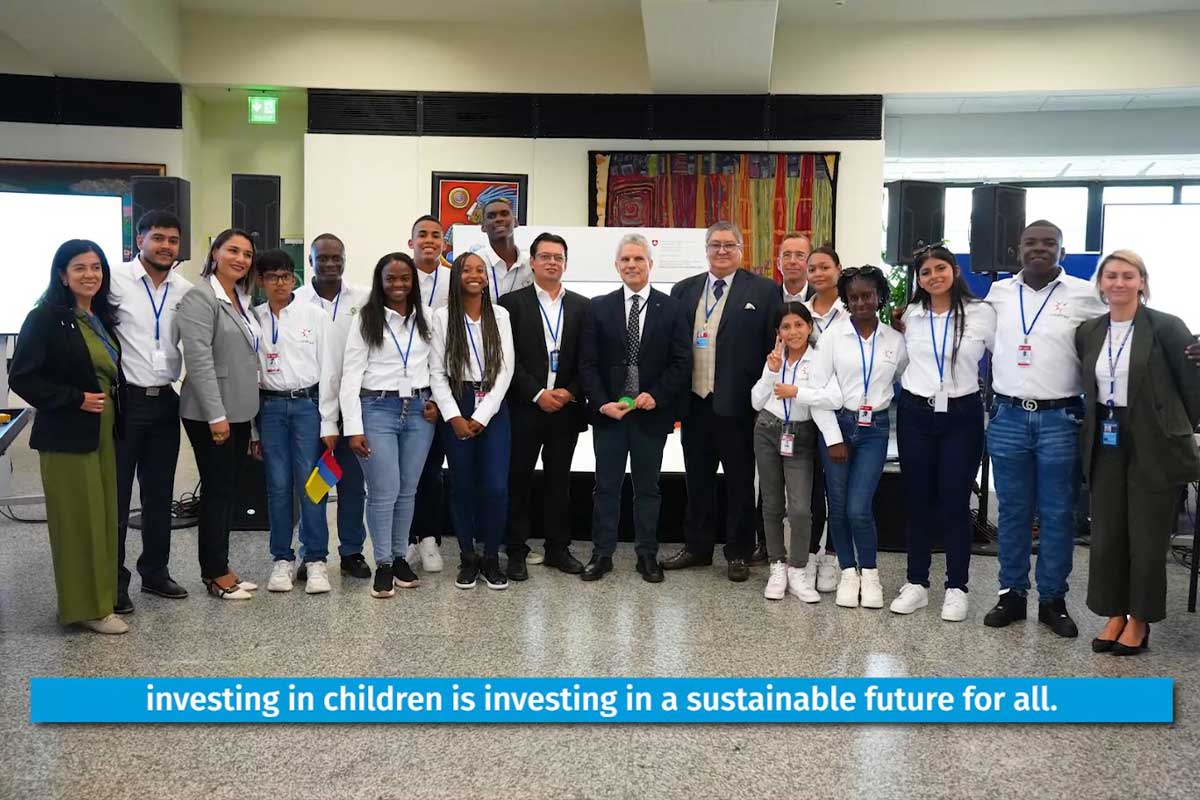
From Northern Cauca to the World: Children Inspiring a Sustainable Future
From Northern Cauca, a group of girls, boys and adolescents began a journey that goes beyond borders. What started at LAB ZFC 4.0—a project of Zona Franca del Cauca—reached Vienna, where they shared a powerful message at the United Nations: industry is also about territory, education, and the future.
This achievement was made possible with the support of UNIDO’s Global Eco-Industrial Parks Programme (GEIPP) and Swiss Economic Cooperation – SECO, connecting training, science and innovation with the Eco-Industrial Parks (EIP) model.
What is LAB ZFC 4.0?
It is an educational and technology initiative led by Zona Franca del Cauca that integrates science, robotics and innovation so young people in the territory can develop solutions to real challenges in their environment. The lab promotes STEM skills, collaborative work and environmental awareness, linking schools, businesses and the community.
From a Local Lab to the UN in Vienna
The LAB ZFC 4.0 experience was presented in Vienna, showing that education and industry can move together toward sustainable development. This international step highlights the talent of Northern Cauca and shows how EIPs can be platforms to educate, innovate and create opportunities.
Why This Matters for Colombia
-
Territorial transformation: investing in children strengthens peace, equity and sustainable development.
-
Talent for the productive transition: youth trained in science and innovation, ready for circular economy, resource efficiency and clean technologies.
-
School–business link: partnerships that connect learning with industrial challenges and value chains.
Connection with the EIP Model
The EIP approach promotes industrial symbiosis, shared infrastructure and governance in industrial parks and free trade zones. Initiatives like LAB ZFC 4.0 add the human and educational component—building a local talent base that accelerates the adoption of sustainable solutions across the productive sector.
Next Steps
-
Scale the lab to more educational institutions in Northern Cauca.
-
Link student projects to real challenges from companies in industrial parks and free trade zones.
-
Mobilize funding for equipment, mentoring and innovation fairs.
-
Measure impacts (participation, prototypes, educational continuity, employability).
Cooperation That Makes It Possible
This progress is possible thanks to UNIDO, the support of MINCIT (Ministry of Commerce, Industry and Tourism), and funding from the Embassy of Switzerland in Colombia – SECO (SECO Economic Cooperation and Development), whose joint efforts are driving inclusive, competitive and sustainable industrialization in the country.