
GEIPP-EIP
UNIDO's Global Eco-Industrial Parks Programme, and what it does in Colombia.
Who we are
UNIDO and the Global Eco-Industrial Parks Programme
The United Nations Industrial Development Organization (UNIDO) is the United Nations specialized agency that promotes inclusive and sustainable industrial development to reduce poverty, enable inclusive globalization, and support environmental sustainability.
The objective of the Global Eco-Industrial Parks Programme (GEIPP) is to demonstrate the feasibility and benefits of Eco-Industrial Park approaches to increase resource productivity and improve companies’ economic, environmental, and social performance. GEIPP contributes to inclusive and sustainable industrial development in participating developing and transition economies.
Since 1994, UNIDO has partnered with developing countries and transition economies to increase the competitiveness and productive capacity of industry, particularly small and medium-sized enterprises. The State Secretariat for Economic Affairs of Switzerland (SECO) has substantially supported these efforts for more than 20 years.
GEIPP around the world
A programme applied in seven countries


Where it comes from
Three decades of work
Over the past three decades, UNIDO has promoted the integration of resource efficiency and cleaner production in industries and Industrial Parks in developing and emerging economies through the implementation of pilot initiatives and global knowledge dissemination projects.
- 2010UNIDO carries out its first pilot initiatives on Eco-Industrial Parks, in India and Tunisia.
- 2012The work expands under the joint UNIDO–UNEP global programme on Resource Efficient and Cleaner Production (RECP), funded by SECO.
- 2015GEIPP pilot projects start in seven countries: Ukraine, Egypt, Indonesia, Viet Nam, South Africa, Colombia, and Peru.
GEIPP in Colombia
What the project seeks in the country
The EIP Colombia project seeks to improve resource productivity and the environmental performance of Industrial Parks through the application of Eco-Industrial Park approaches.
Parks are expected to achieve savings in operational costs, reduced consumption of materials, energy, and water, and lower costs for waste disposal and treatment, emissions, and wastewater, while also contributing to compliance with international environmental and social regulations.

The components of the Eco-Industrial Parks model.
Pilot parks
Seven parks supported
Three Industrial Parks have been prioritized in Phase I and four in Phase II, for a total of seven parks selected to receive technical assistance, advisory services, and capacity-building support:
- Malambo Industrial Park (PIMSA)
- Cauca Free Zone
- Occidente Free Zone
- Bogotá Free Zone
- Pacífico Free Zone
- Santander Free Zone
- Parque Central Free Zone
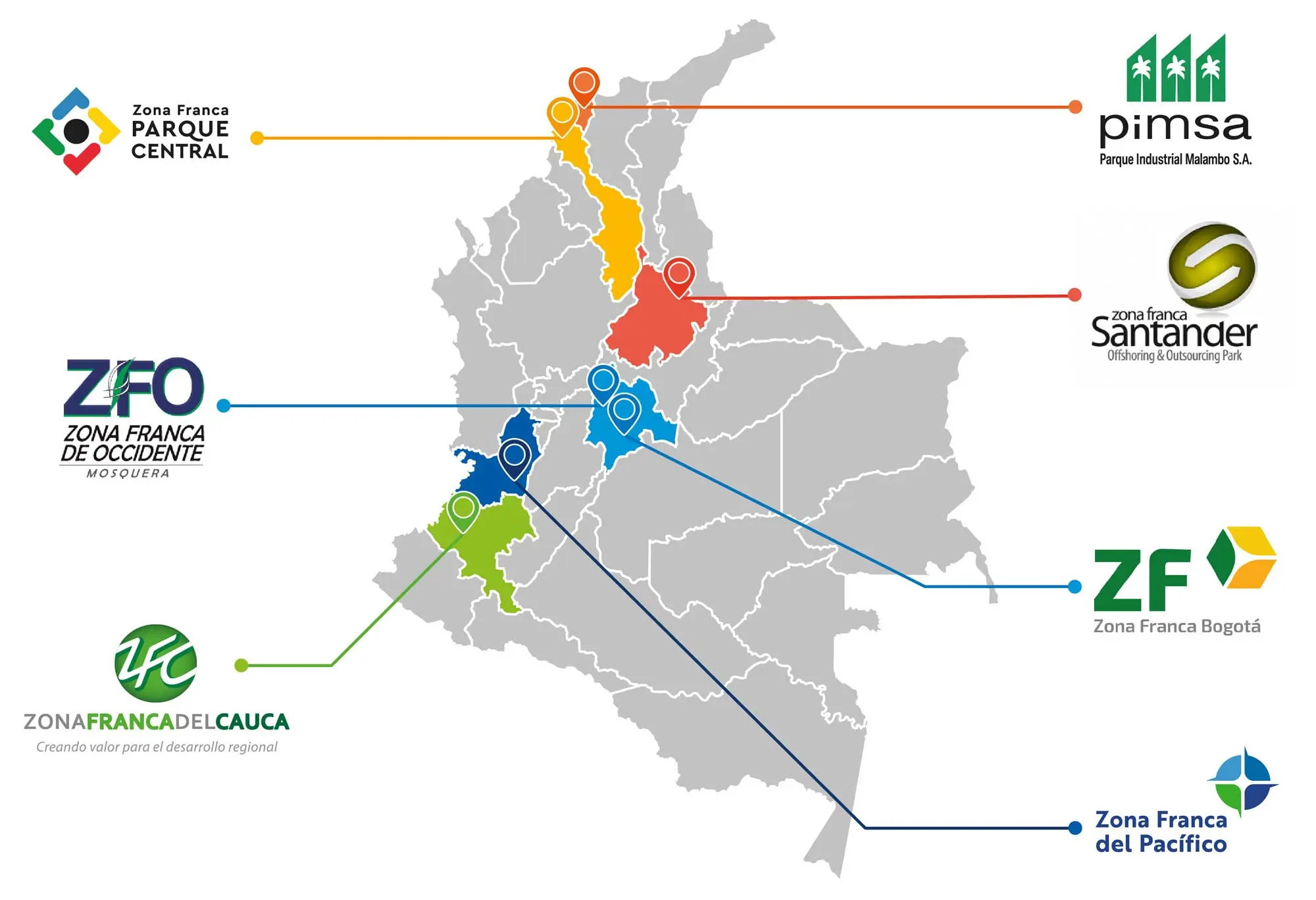
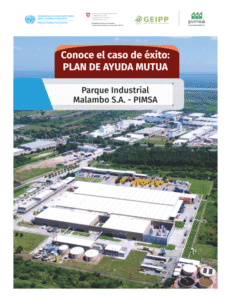
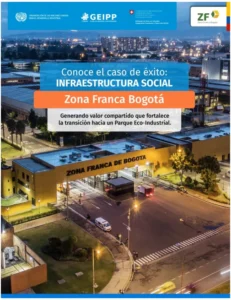
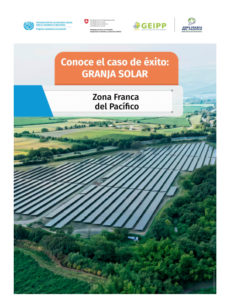
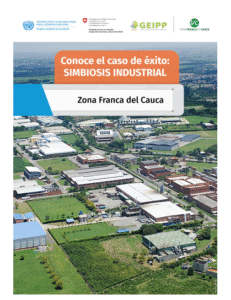
Hover over PIMSA, Zona Franca Bogotá, Zona Franca del Pacífico or Zona Franca del Cauca to see their success stories.