
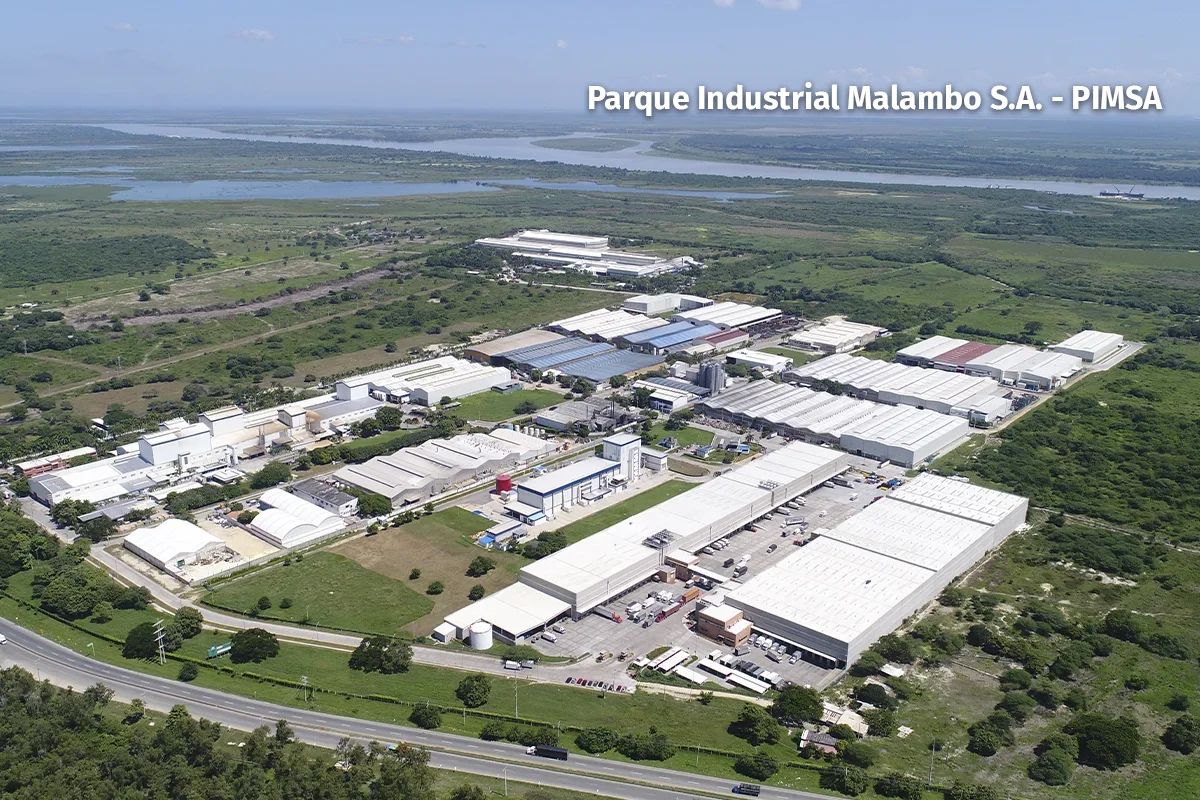
Why Eco-Industrial Parks Can Position Colombia and the Region as a Destination for Sustainable Investment
In a global context where sustainability is no longer an added value but a decisive criterion for investment, Eco-Industrial Parks are emerging as a strategic alternative to boost competitiveness, attract capital, and strengthen sustainable productive development.
In Colombia and across Latin America, this model has been gaining relevance due to its ability to integrate resource efficiency, shared infrastructure, industrial symbiosis, regulatory compliance, and governance—factors that are now being examined more closely by companies, investors, and cooperation agencies.
More than a trend, Eco-Industrial Parks represent a practical way to prepare territories to respond to new demands in international markets, reduce risks, and create more favorable conditions for long-term sustainable investment.
A New Competitiveness Criterion for Attracting Investment
For many years, industrial competitiveness was evaluated mainly in terms of costs, geolocation, labor availability, and incentives. Today, that landscape has changed. Investors are increasingly assessing variables related to social performance, environmental performance, operational resilience, energy efficiency, resource use, and traceability.
In this context, becoming an Eco-Industrial Park offers a clear differentiating factor. This approach enables multiple companies to share solutions, apply economies of scale, optimize processes, and develop synergies that improve both productivity and the environmental performance of the park or free trade zone.
This sends a clear signal to the market: the territory offers not only square meters for production, but also the conditions to do so in a more efficient, responsible way aligned with national and international standards.
Eco-Industrial Parks and Sustainable Investment: An Increasingly Strong Relationship
Sustainable investment in Eco-Industrial Parks is gaining momentum because it responds to priorities that are now essential for many organizations: impact reduction, greater operational efficiency, regulatory compliance, innovation, and a long-term vision.
For an investor, an industrial environment that incorporates sustainable practices can offer advantages such as:
- Greater predictability regarding regulatory requirements.
- Better conditions for implementing circular economy projects.
- Access to collaborative business ecosystems.
- Lower costs associated with inefficient use of energy, water, and materials.
- Stronger reputation and alignment with ESG and corporate sustainability goals.
For this reason, Eco-Industrial Parks should not be understood only as an environmental initiative. They are also a platform for strengthening industrial competitiveness and creating more attractive conditions for new investments.
Industrial Symbiosis as a Driver of Competitiveness
One of the most relevant elements of the model is industrial symbiosis, understood as collaboration between companies to make more efficient use of resources, materials, energy, water, services, or by-products.
When this approach is properly implemented, it can generate concrete benefits such as:
- Waste reduction.
- Lower operating costs.
- Logistics optimization.
- New business opportunities between companies.
- Stronger and more sustainable value chains.
The relationship between industrial symbiosis and competitiveness is becoming increasingly evident. A park or free trade zone that facilitates this type of coordination improves its overall performance and increases its strategic value for companies seeking environments that are better prepared to operate in a low-carbon, efficiency-oriented economy.
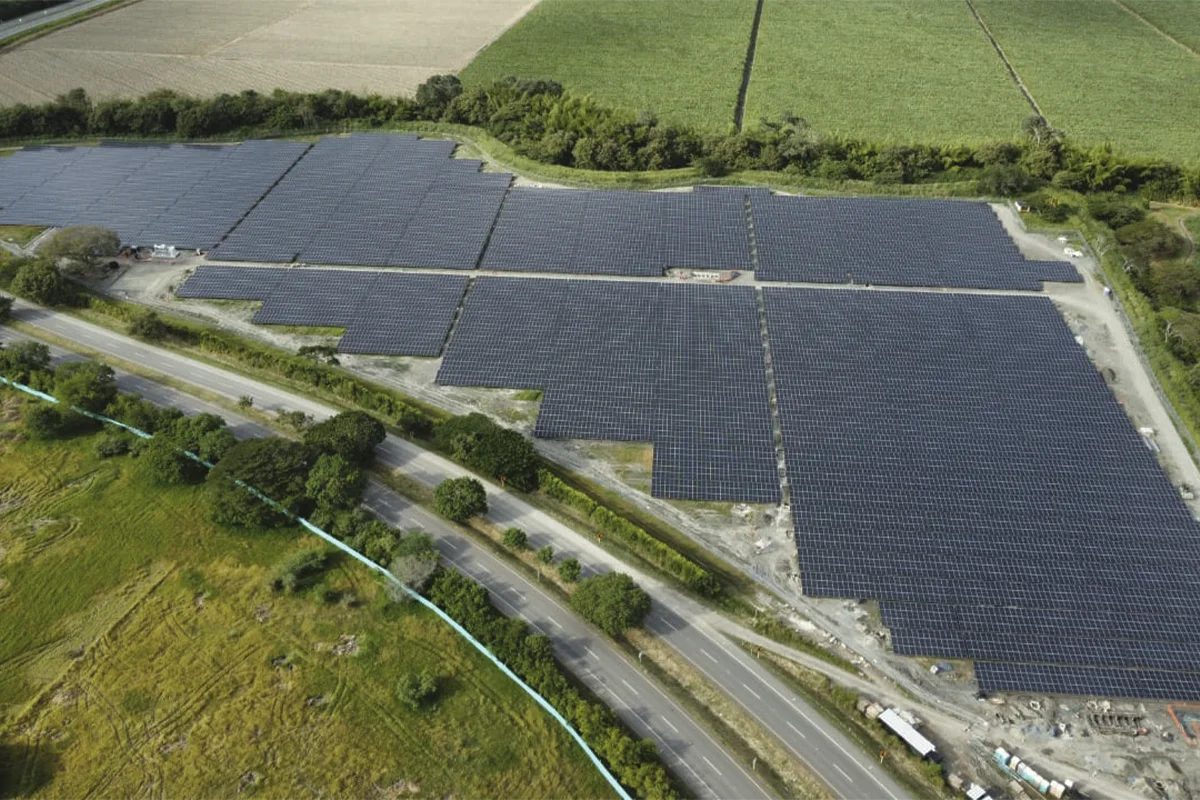
Zona Franca del Pacífico
CELSIA – Granja Solar
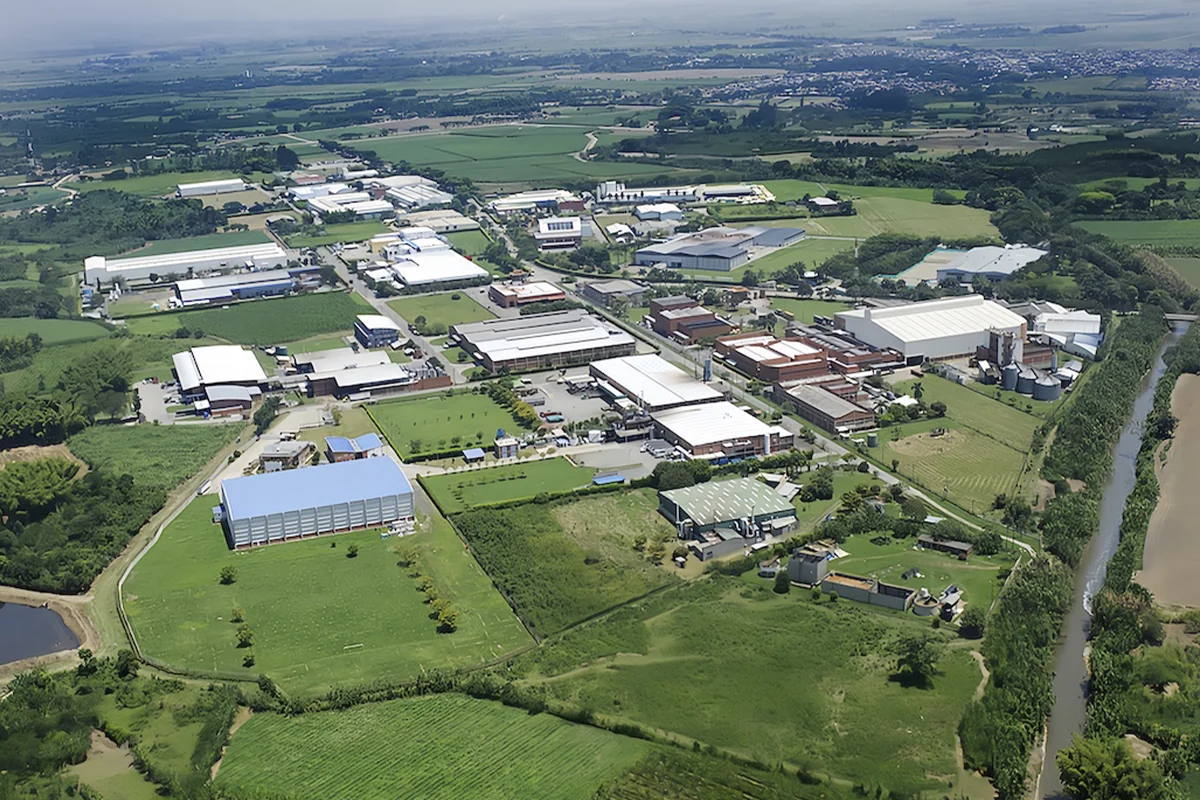
Zona Franca del Cauca
Standards and a Common Language to Scale the Model
Another key aspect in positioning Colombia and the region as a destination for sustainable investment is the existence of standards for Eco-Industrial Parks. Having technical frameworks and shared references helps build trust, organize processes, and facilitate the replication of the model in different territories.
Standards allow public and private stakeholders to speak the same language about industrial sustainability. They also help identify priorities, measure progress, and demonstrate that efforts in infrastructure, management, and business coordination are supported by clear criteria.
As countries across the region strengthen these frameworks, it will be more feasible to project Latin America and the Caribbean as a space capable of offering consistent conditions for attracting transnational investment with a sustainability focus.
Regulation, Governance, and a Long-Term Vision
The transition toward Eco-Industrial Parks also requires strengthening the regulation of Eco-Industrial Parks and the governance mechanisms that make their implementation possible.
This is not only about establishing rules, but about building enabling environments where public policy, institutional coordination, business leadership, financing, and technical capacities come together. Industrial sustainability does not depend on a single company or a single institution: it requires coordination, appropriate incentives, and a shared vision.
When that foundation exists, the EIP model can scale more solidly and translate into environmental, social, and economic benefits for companies, parks, territories, and the country.
An Opportunity for Colombia and the Region
Colombia has the opportunity to continue positioning itself as a benchmark in sustainable industrial development, at a time when markets increasingly value productive solutions capable of combining competitiveness, innovation, and sustainability.
In this context, Eco-Industrial Parks can play a decisive role. Not only because they provide tools to improve the performance of industrial parks and free trade zones, but also because they help build a stronger territorial value proposition to attract companies and investments aligned with present and future challenges.
Thinking of Latin America as a hub for sustainable investment means advancing toward more integrated, collaborative, and efficient models. Eco-Industrial Parks are part of that conversation and, above all, part of that solution.